

A collaboration workshop – for whom and why?
A team’s strength lies in its members’ ability to communicate, listen and grow together. Developmental feedback and collaboration workshops can create a trusting environment where every team member feels valued and included. Laura Johanna Tuisk, service manager for family doctor services, organised exactly such a workshop for her team. The workshop was facilitated by Sunergos management consultant and coach Monika Prits.
The aim of the workshop was to hold two-way collaboration conversations with the members of the core team, where everyone could give and receive feedback in the name of better cooperation. Members of the family doctor services core team, Sandra and Reelika, share their experiences and impressions of the workshop; according to them, what they experienced together brought the team even closer and gave new energy and direction for moving forward.
What expectations did you go into the collaboration workshop with?
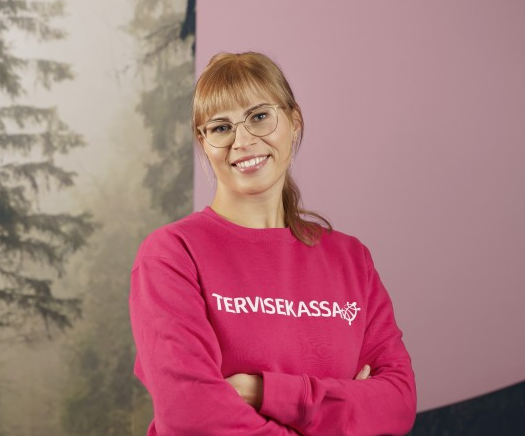
Sandra
Sandra: At that time I was one of the two newer members of the family doctor services team and had worked at the Health Insurance Fund for almost a year. The Health Insurance Fund was moving to service-based management, so there was some confusion in the team about roles, tasks and other topics. As a new employee, you are afraid to give feedback and express your wishes about tasks and the like to colleagues. The reason is a human fear: what if I can’t do it politely and gently, what if I am misunderstood or create a situation that makes communication in the team worse. I hoped I could express all these fears in the workshop.
What new knowledge or approaches did you gain?
Reelika: It confirmed the knowledge that it is better to give feedback straight away. It is also important to know how to give feedback: rely on facts, not feelings. And also: don’t soften it!
Sandra: For me the newest knowledge was using I-messages. In hindsight it seems logical, because I can only speak for myself and about how something or a situation makes me feel. The materials we received made preparing an I-message a little easier. I also understood that if I want to give feedback so that something changes as a result, I mustn’t start softening what I said after giving the feedback.
What were the biggest challenges you had to deal with?
Reelika: Giving constructive feedback to a colleague.
Sandra: The hardest moment was probably when I had to stand face to face with a colleague and really say my feelings and thoughts out loud. Surprisingly, receiving positive feedback about myself was uncomfortable. Personally, I find it easier to accept negative feedback than positive.
What surprised you most about giving or receiving feedback, including collaboration conversations?
Reelika: When feedback is given with good intentions and honestly, without negative emotion, the feedback received is actually useful and moves you forward. I was surprised that I didn’t take a deep breath and start arguing back.
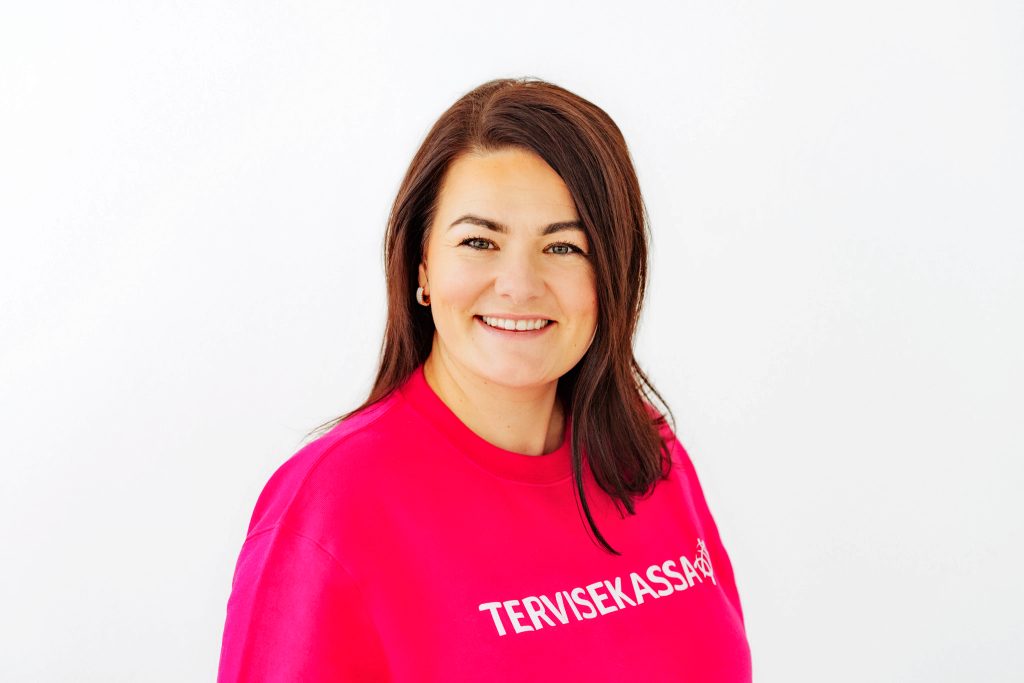
Reelika
Sandra: It wasn’t a big surprise that we all have the same fears about giving feedback: we don’t want conflicts, don’t want to hurt anyone’s feelings, want good teamwork to continue and so on. In fact, a workshop like this gave a very good chance to sense and understand what our team is like and who the people you work alongside every day are. With people with similar personal traits and values, even discussing difficult topics brings you together, because a shared goal and similarities help understand each other better. If the team had been very large or someone had been radically different by nature, the result would probably have been different.
How did you feel when you gave or received feedback?
Reelika: I still find giving constructive feedback difficult and would rather avoid it. I should probably practise it much more. I try to compensate by giving positive feedback.
Sandra: It felt very anxious. For me it is easier to be in the role of the person receiving feedback.
How did the workshop contribute to cooperation in your team?
Reelika: It definitely had a very positive effect and created a greater sense of unity.
Sandra: The workshop helped keep the atmosphere in the team transparent: there is no so-called elephant in the room. Team members know what others think, feel and believe, and people dare to express it. This avoids a situation where I dare to say something to one colleague behind someone’s back but am afraid to say it to the person it concerns. So a feedback workshop certainly keeps relationships in the team healthy and reduces the chance of conflicts arising.
How did giving feedback affect the team’s dynamics and trust?
Reelika: An open and honest relationship and communication are important in all relationships. The ability to give feedback in a way that doesn’t hurt yourself or the other party always builds trust and moves things forward.
Sandra: It seems to me that we now dare to give each other feedback more confidently. For example, what feeling a meeting created in someone and so on. Still, from time to time I forget to put the feedback together as properly as we practised in the workshop.
What was the most important thing you took away from this workshop?
Sandra: Getting negative feedback (i.e. getting any feedback at all) is better than nothing.
For whom, i.e. for teams in which situation, would you definitely recommend such a collaboration workshop?
Reelika: In my opinion, such workshops should be organised for the team from time to time, because even teams with very good dynamics benefit from it to prevent problems and disagreements. If someone does have something on their mind that they haven’t been able to give a colleague feedback about, doing it in this format is certainly much gentler than in a separate conversation.
Sandra: It undoubtedly suits all teams and every situation. But above all those teams where confusion and misunderstandings have arisen in connection with changes in the team or the division of roles. As a result, certain patterns repeat, and if someone has tried to give feedback but nothing has changed, or they haven’t known what to say at all, this workshop creates a trustworthy and understanding environment where team members can give and receive honest feedback. As a result, the team’s work and communication improve.
Please share one tip that each of us could use to keep teamwork running smoothly and preserve joy at work.
Reelika: Be honest and open! If it’s hard, ask for help. Notice and offer help!
Sandra: Disagreements are OK – accept that and stay a team player. Getting feedback on a decision, an idea or your work, and others opposing it, moves things forward. If I relied only on statistics, facts and my own gut feeling or opinion when deciding or creating a new solution, it would be much harder. Others’ feedback makes you see things from several points of view, and someone’s opposing question – for example “Is this logical?” or “How can that be if it hasn’t been done before?” – actually protects your back. Partners, citizens, the media and so on may ask the same questions. Such points make you think whether you overlooked something; perhaps a new fact emerges and the idea or decision isn’t as good and bulletproof as you thought. Or the other way round – thanks to different perspectives, I am better prepared, the team is involved and the decision is united, because everyone’s opinion has been heard. The person giving feedback, i.e. the one who disagrees or opposes, should also understand that it is normal to have a different view. If, for example, six people in the team are for and two against and the decision goes with the majority, the decision is still a shared one.
What would you say to encourage those who have considered this workshop but haven’t got round to it yet?
Sandra: Fear has big eyes. In fact, there is more to gain than to lose from honest, well-given feedback. If relationships in the team get worse after feedback, that too is a valuable indicator for the service manager about how to move forward, or for a team member to assess whether this work environment, team or role suits them. Change can only happen when we give feedback, express our feelings and wishes, and as a result try to find the golden mean between team members or as a whole team.
The workshop helped keep the atmosphere in the team transparent: there is no so-called elephant in the room.
If you feel your team needs a collaboration workshop like this, feel free to contact Sunergos facilitator and coach Monika.
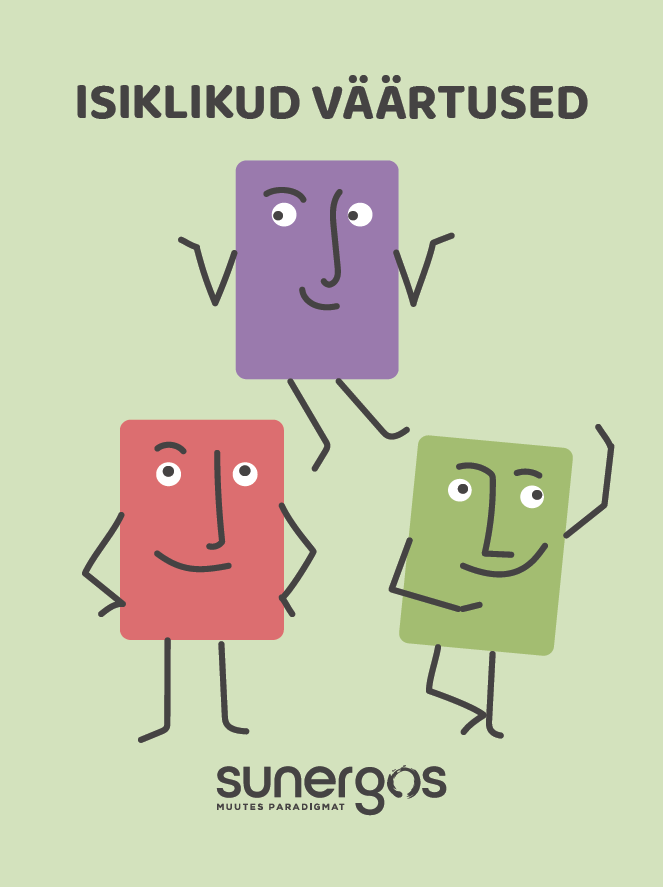
The cards are based on Shalom Schwartz’s theory of values, which focuses on how people’s values shape their attitudes and behaviour.
Get your own set of personal values cards here, or contact our development partner Monika Prits, creator of the cards, who also runs trainings on how to make the best use of these cards in your work.
Tool: Personal values
- Price €69 (incl. VAT)