
Krista Humal
The experience of moving to service-based management has been written down by Krista Humal, HR manager of the Estonian Health Insurance Fund, and Jaarika Järviste, head of the development department, where the change was supported by Sunergos service-based management consultant and coach Monika Prits.
The Estonian Health Insurance Fund began moving to service-based management at the beginning of 2022, and we have now been on this journey for three years. If you ask why we did it, it is because the process-based management we had used for a long time no longer supported our next development leap. We needed to turn the focus of how the organisation is managed towards a customer-centred view.
Where did we start?
Two years ago we were a process-based organisation, where work took place in departments with little information flowing between them. Each department dealt with its own part of the process without knowing how their work affected the overall picture. One department added a new service to the list of health services, another wrote the service into the service provider’s contract, a third advised the service provider and a fourth carried out supervision.
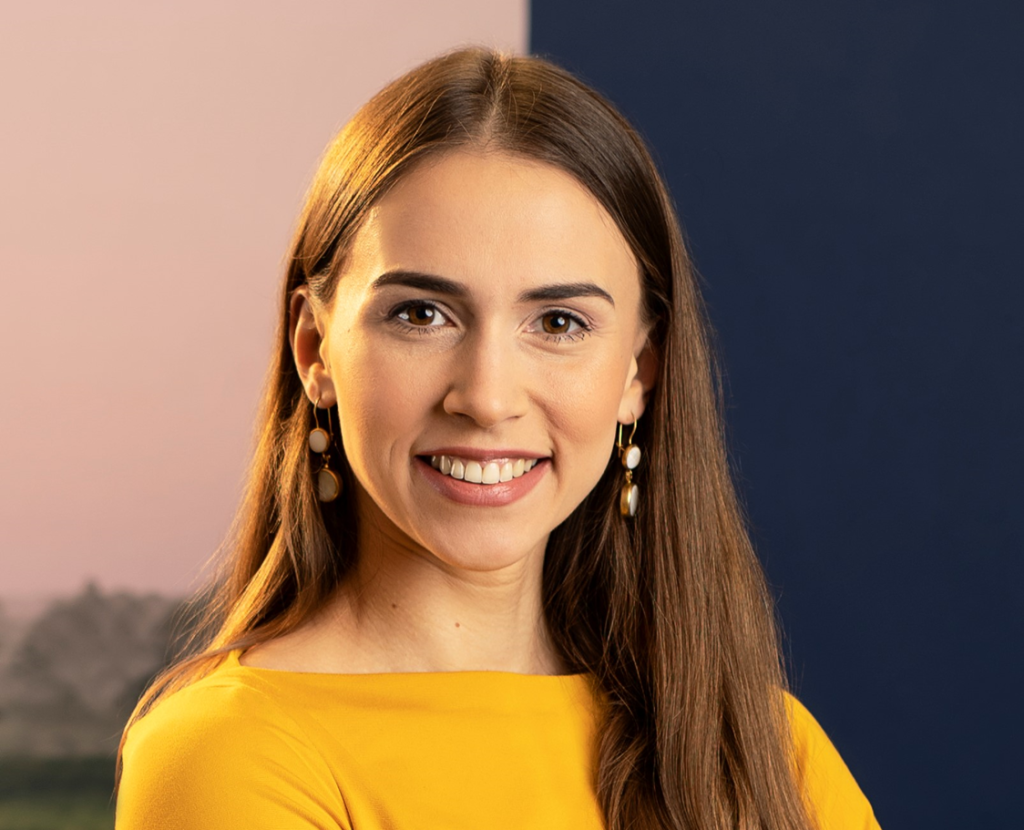
Jaarika Järviste
Responsibility for results often fell between two links in the process or two departments. We were skilled firefighters, reacting to problems instead of preventing them and consciously mitigating risks.
As everyone had their hands full, no one had time to stop and ask who our customer is and whether what we offer them is what they need. No one had time to assess whether the work done actually improves people’s health outcomes.
The move to service-based management was driven by three goals:
- Start from the customer in managing services – we know to whom, why and what value we offer.
- Ensure that each service has a clear owner across the whole chain – the service manager – and achieve clarity of roles, focus and priorities.
- Ensure ongoing monitoring of services and start preventing fires instead of fighting them.
Right at the start it became clear that a new world isn’t created in one go. To begin with, we set up a voluntary, enthusiasm-driven service management working group that also included management board members and the HR department. Although the research literature supports including 6–7 people in such steering groups, our working group had 9–12 people: it worked because not everyone could always attend.
As a second step, we tested on a few (5) services whether the service development view could work in a way that could later be adopted across the whole organisation. And once we had confirmation, we debated what size services should be in the case of the Health Insurance Fund.
It pays to invest in getting the challenges and the goal right. That includes the time of the management board, whose contribution and support are key in carrying out changes of this calibre.
The first major structural change
Then we got more concrete: we decided to carry out the first stage of changing the organisation’s structure. The areas of responsibility of the four management board members remained – general management, healthcare, insurance and digital. We added the role of portfolio manager, which did not exist in the structure before, but for the time being the departments and their heads also remained.
The portfolio manager is a leader with a strategic view who draws up the strategy and vision for the service portfolio, sets goals for services and creates development priorities. The portfolio manager role can be entirely separate, reporting directly to a management board member – this was where we saw that an area could have a special focus, for example the portfolio manager for disease prevention and health promotion. On the other hand, the portfolio manager role can also be held by a people manager, i.e. a head of department, for example the head of the treatment services department.
The head of department’s task is to create an environment for success: they manage and develop people, of course in cooperation with service managers.
Services belong both to a portfolio and to a department. Services are led by a service manager, who has a complete overview of the service and holds it together as a whole, is responsible for customer satisfaction, creates the service core team and through it develops the service as a whole.
We divided services broadly into two: core services and support services. Core services are services where the value created is directed outside the organisation, for example family doctor services. A support service is one where the customer is either mainly inside the organisation, for example HR management, or both inside and outside, for example communication and marketing.
We decided that for support services the head of department can also be in the service manager role, as these departments do not have many different services. For core services, however, we quickly realised that the head of department would very soon become a bottleneck, as these are very large services and the head of department cannot develop the service and manage people at the same time.
A head of department usually focuses on managing a specific department or function, working on the principle of a competence centre, for example in finance, IT or HR. In contrast, a service manager is responsible for managing the service life cycle and the customer journey across the whole service, which includes understanding customer needs, gathering feedback and continuously developing and adapting services. The service manager’s role often crosses the boundaries of one department.
As the roles of head of department and service manager require different skills and competences, we saw that if one person fills both roles, it does not support carrying out the desired changes. Rather, it leads to overload, loss of focus and burnout, which in turn would affect the quality of managing both the department, i.e. people, and the service: neither role would get the depth and attention it needs.
Development has also meant that we have merged services. At first we didn’t have a very good understanding of how big a service would become and what the Health Insurance Fund’s role in providing it is. Such unclear moments shouldn’t be feared, and it must definitely be explained to people from the start that both the structure and the list of services change over time. With hindsight, I would say this needs to be repeated boldly and quite often.
Where have we got to in two years?
Today we have reached the stage where service core teams work towards shared goals and take responsibility across the service life cycle.
In the first year we put the list of services in place, created clarity in roles and responsibilities and experimented with setting up the first service core teams. A key result was creating the service development process, in which we separated the goals of the service and the project and built in the evaluation of results as part of the process. This is how we ensure a complete value chain and a return on investment.
In the second year, all service descriptions and value propositions were completed and the services got a clear direction. The first cross-institutional core teams were launched in cooperation with TEHIK and the National Institute for Health Development. We grouped services into portfolios. By now the development process has also taken root across the organisation.
In today’s rapidly changing world, we have to keep up the pace. We have to create clarity and make decisions in situations of great uncertainty. A service manager’s ability to see beyond constraints, adapt quickly, manage risks and focus on customer needs is key to achieving sustainable success. The development of service managers remains our priority – self-directed, resourceful, bold and quickly adapting people ensure our success!
In today’s rapidly changing world, we have to keep up the pace. We have to create clarity and make decisions in situations of great uncertainty.
What happens next?
We have now reached the stage in the organisation’s development where we are about to make a second structural change. The new structure of the Health Insurance Fund will be based on portfolios: instead of the previous twelve departments, there will be eight portfolios.
The portfolio manager remains responsible for drawing up and implementing the strategy and vision of the service portfolio, setting goals and metrics, monitoring and analysing results, creating an environment where people can succeed, and leading. The service manager remains responsible for the functioning and development of the service and for customer satisfaction. We can also already see that some service managers are happy to take on a people management role as well – this way we can grow future leaders within the organisation.
Our chair of the management board and the management board members have always been involved in all such changes, because without their support and interest it is not possible to lead such big changes. Top leaders don’t need to know every detail of what is done in a service-based system, but it is important that they support building a culture with the customer and the value created for them at its centre.
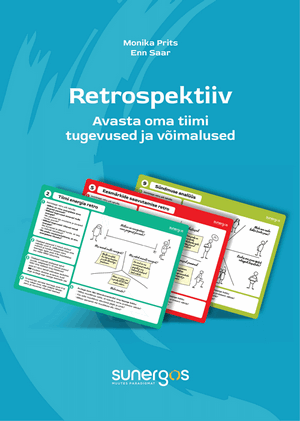
A retro is a tool that makes it possible to analyse quickly and in a structured way what to continue and what to change in how the team works. Get your own set of retro cards here, or contact our development partner Monika Prits, creator of the cards, who also runs trainings on how to make the best use of these cards in your work.
Retrospective Toolbox
- 10 guides for running team retros
- Price €69 (incl. VAT)