
Good ideas aren’t always born in meetings. Sometimes you just have to break habitual patterns.
What happens when people get the chance to step out of their usual roles, look at problems with fresh eyes and look for solutions together? The Land and Spatial Board decided to find out.
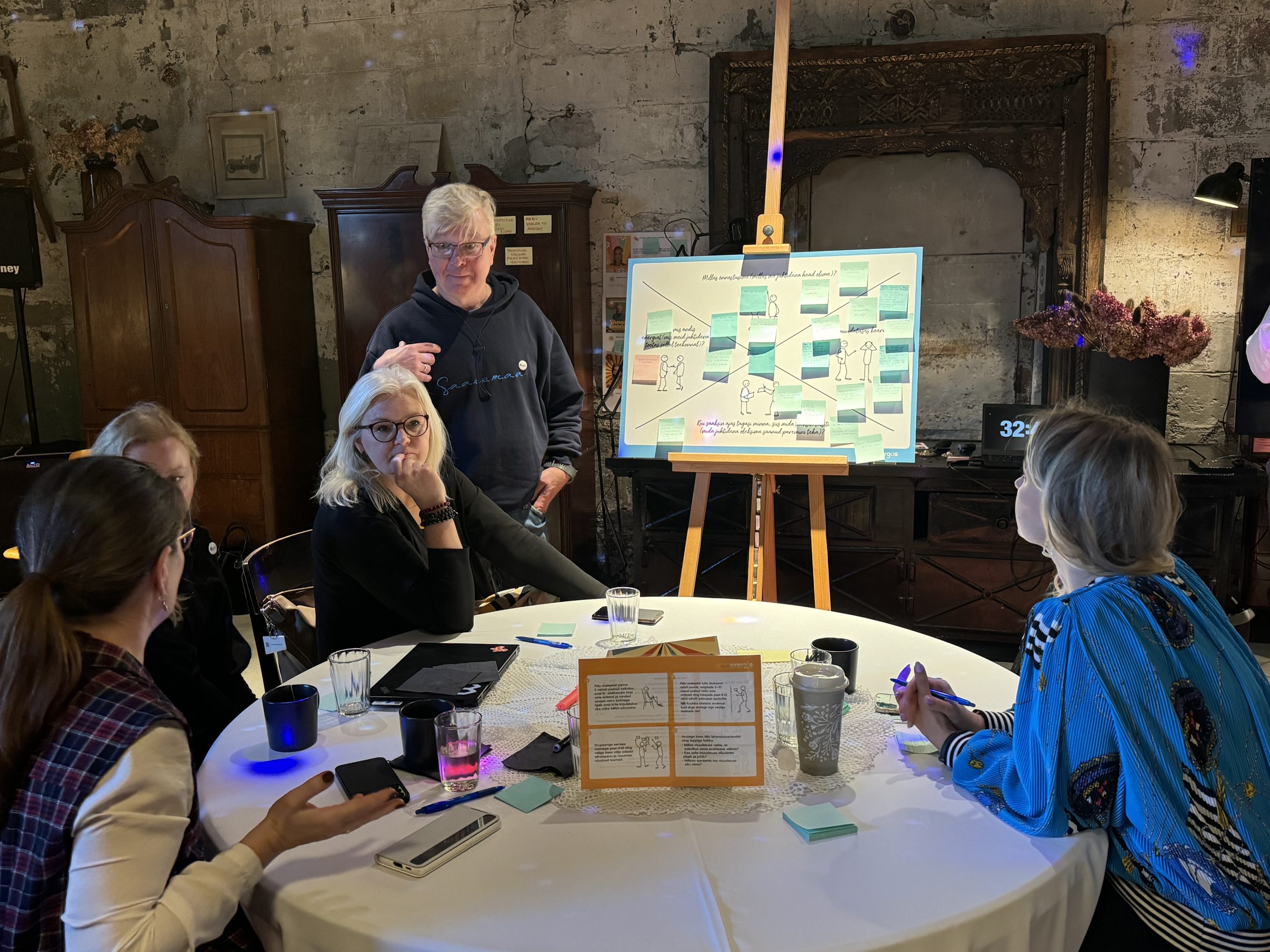
At the hackathon “Breaking Patterns”, nine teams set out to solve nine challenges that matter to the organisation. Concrete proposals were produced, and the first of them are already being implemented. But the hackathon’s greatest value lay in something more than good ideas.
It was precisely the wish to bring people together, encourage cooperation and find new solutions that gave birth to the hackathon “Breaking Patterns”, led by Sunergos development partners Monika Prits and Paul Lilje.
The hackathon in numbers: 9 teams · 9 real-life challenges · 9 proposed solutions · 8 hours of work together
In brief
- Four agencies were merged into one – the hackathon brought people from different units to work on real problems.
- Instead of “Why can’t we?”, people started asking “How could we?” – the mindset changed.
- The audience favourite, “One customer. One journey. One answer.”, is already being put into practice.
“Often we don’t lack ideas or capable people. Rather, in everyday work we lack the time and opportunities to think together beyond our habitual boundaries.”
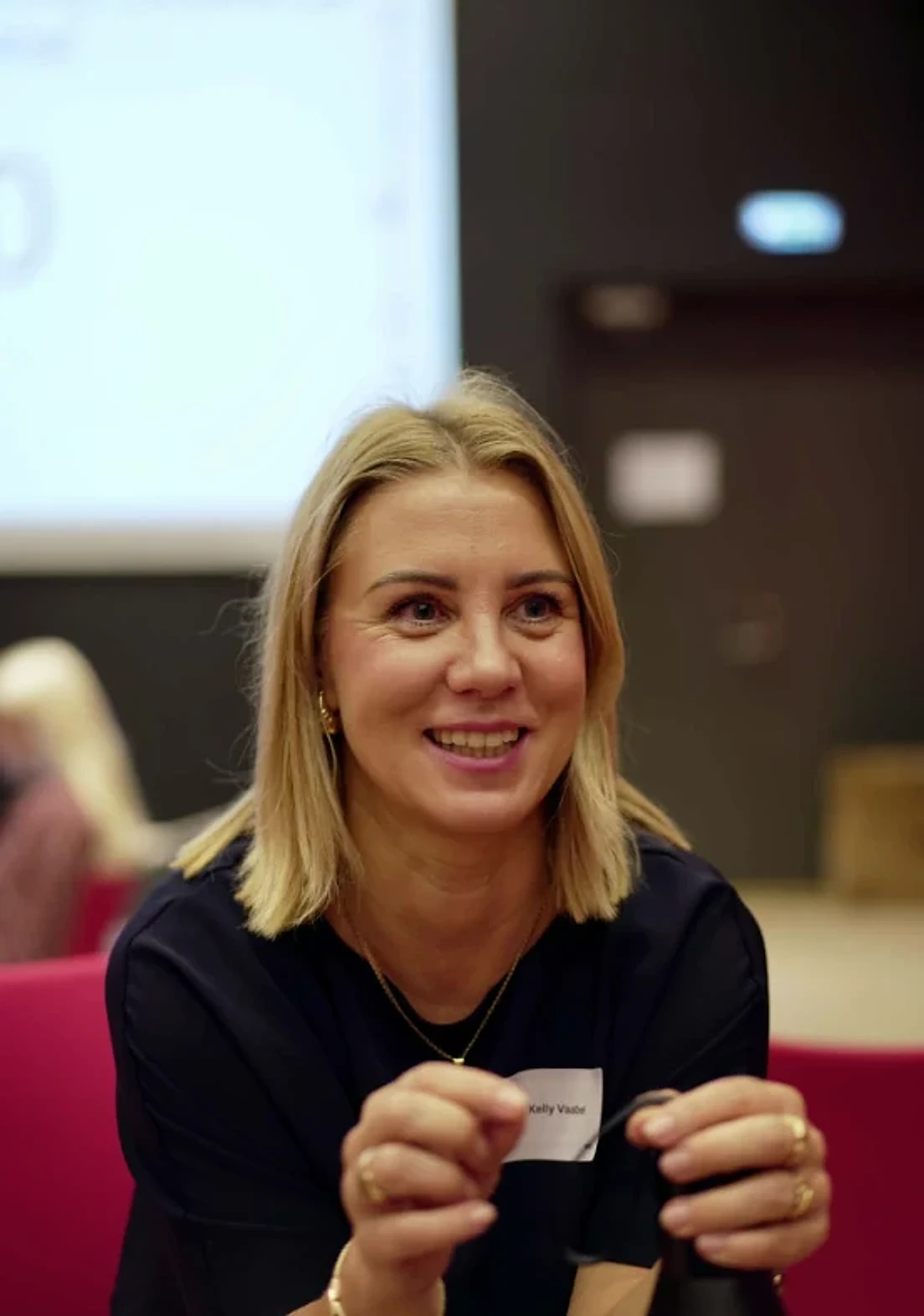
Kelly Vaabel, organiser of the Land and Spatial Board’s hackathon
Four agencies merged into one. But how do you shape a single organisation?
The Land and Spatial Board was created by merging four agencies. Different work cultures, experiences and established ways of working meet in one organisation.
In developing service-based management, an important realisation was reached: describing services, defining responsibility and designing a management model are not enough on their own for people to start acting as one organisation.
“Discussions with service managers brought up several bottlenecks that were hindering the development of services and smooth cooperation. Many problems reach beyond the boundaries of a single service or structural unit, and solving them requires bringing together people and knowledge from different fields,” Kelly explains.
That is how the idea of trying a different approach was born. Instead of organising yet another meeting to discuss problems, they decided to create an environment where people can step out of their usual roles and look for solutions together.
The aim was not only to collect new ideas, but to change how problems are noticed, talked about and solved in the organisation.
“How could we?” instead of “Why can’t we?”
In everyday work, we tend to approach problems from the point of view of our own service, unit or area of responsibility. Meetings often spend a lot of time describing obstacles and causes, but little time is left for reaching solutions.
At the hackathon, they decided to change this pattern.
Nine teams set out to solve nine real-life challenges. The teams brought together challenge owners, mentors, service designers and employees from different fields, whose everyday tasks don’t usually overlap.
According to Kelly, one of the biggest surprises was how quickly people with different backgrounds and experience were able to find a common language and start working out substantive solutions.
“Problems that had been discussed before got a new perspective. People dared to ask different questions, challenge existing assumptions and look for solutions based on the needs of the organisation as a whole.”
Kelly Vaabel
The question the discussion started from also changed: instead of “Why can’t we?”, people started asking “How could we?” and “What can we do ourselves?” This may seem like a small difference, but it actually reflects an important change in mindset. Instead of focusing on obstacles, people start looking for opportunities and taking responsibility for finding solutions.
The hackathon showed that what often stands in the way of solutions is not a lack of ideas, but habitual ways of thinking and working.
One customer. One journey. One answer.
The hackathon produced nine proposed solutions, the best of which were recognised. The audience favourite was the concept “One customer. One journey. One answer.”
To get an answer to their question, a customer shouldn’t have to find their way around the organisation’s structure or know which unit’s area of responsibility their concern belongs to. Dealing with the organisation must be as simple and seamless as possible for the customer.
This example also illustrates the essence of service-based management well – the organisation’s activities must be seen above all through the value created for the customer, not through its internal structure.
What is especially important, though, is that the solution didn’t remain just a good idea. According to Kelly, the changes proposed within it are already being implemented under the leadership of the head of the area.
This is where the real value of the hackathon shows – when ideas born together become concrete changes in the organisation’s everyday work.
A hackathon’s success isn’t shown only by the ideas it produces
Although the hackathon resulted in nine proposed solutions, Kelly considers its wider impact the most important.
“For me, the hackathon’s greatest value lay not only in the ideas that were created, but also in what people learned about themselves and each other’s ability to work together.”
Kelly Vaabel
The hackathon helped create new contacts, strengthen cooperation and bring out employees’ skills that don’t always show in the usual way of working.
It also gave practical experience of what service-based management really means. Creating value for the customer requires cooperation across the boundaries of structural units and shared responsibility for the result.
For the Land and Spatial Board, the hackathon was not a one-off event, but part of a longer development journey.
Next step: next up is an innosprint, in which the solutions born at the hackathon will be developed further, tested and the steps for implementing them refined. The plan is to use Innotiim methods and prepare so-called sherpas, i.e. people who support the challenge owners in developing and implementing the solutions.
A lesson for the organisers: the eight-hour format was too short for developing and testing some solutions in more depth. Next time they are considering a hackathon of at least 12 hours and more deliberately involving people with technology and AI skills.
An organisation doesn’t change just by changing its structure and processes
What does Kelly recommend to other organisations considering organising a hackathon?
- Start from the change you want. Not from the question of how to organise a hackathon, but from what change you want to achieve in your organisation.
- Choose real problems. The challenges must have clear value for the organisation or its customers.
- Bring different people together. People with different experience and knowledge who can step out of their habitual roles.
- Think through what happens next. Every topic must have an owner, and the organisation must be ready to test and develop the solutions.
Because the real impact of a hackathon isn’t revealed when the winners are announced, but only when the experience starts to change people’s everyday work and the ideas are put into practice.
“Changing an organisation isn’t enough to change structures, roles or processes. We also need to create situations where people can experience a different kind of cooperation. The hackathon showed that a shared goal, a real problem and the freedom to look for solutions can give change a very strong push.”
Kelly Vaabel
And perhaps this is the most important lesson of the hackathon “Breaking Patterns”: organisations don’t always need to look for more ideas. Sometimes you just have to break the habitual patterns that keep people from combining their knowledge, experience and ideas into shared solutions.
The hackathon “Breaking Patterns” was led by Sunergos development partners Monika Prits and Paul Lilje in cooperation with the Land and Spatial Board. The experience was shared by Kelly Vaabel, organiser of the Land and Spatial Board’s hackathon.